
Table of Contents
A refrigerator that feels warm can have a simple airflow or setting problem, but similar symptoms can also come from a fan, sensor, defrost, control, or sealed-system failure. Start by protecting the food, measuring the actual temperature, and checking only the items that do not require disassembly. Use the owner’s manual for your exact model because vent locations, controls, and cleaning access vary.
Use an appliance thermometer instead of judging by touch. The FDA recommends keeping the refrigerator at 40°F or below and the freezer at 0°F. Confirm the cooling controls are on, keep food away from interior vents, check that the doors close and seal, and look for frost covering a rear freezer vent or panel. Follow the owner’s manual before cleaning any accessible condenser area. Stop if diagnosis requires removing panels, handling wiring, or working around refrigerant tubing.
Key Takeaways
- Measure temperature instead of judging by touch. Use an appliance thermometer; food safety comes before troubleshooting.
- Check airflow and closure first. Blocked vents, overpacked shelves, door interference, and heavy frost can all affect cooling.
- Use the exact model instructions. Condenser access, control modes, vent locations, and reset steps vary by refrigerator.
- Stop at the service boundary. Do not remove panels, handle wiring, disturb refrigerant tubing, or attempt sealed-system work.
Protect the Food Before Troubleshooting
Put a refrigerator thermometer near the center of the fresh-food compartment and a freezer thermometer between frozen packages. If temperatures are rising, keep the doors closed as much as possible and move perishable food to another working refrigerator or a properly iced cooler. Do not rely on smell or appearance to decide whether food is safe.
The FDA advises that refrigerated food should remain at 40°F or below. If you are unsure how long perishable food has been above 40°F, use the FDA’s current food-safety guidance rather than guessing. Food protection takes priority over completing a troubleshooting checklist.
What Is the Refrigerator Actually Doing?
- Fresh-food section warm but freezer still cold: note whether interior vents are blocked, whether the evaporator fan can be heard with the door switch engaged as the manual describes, and whether heavy frost covers the freezer’s rear panel.
- Both compartments warm: confirm power, cooling settings, recent installation or power interruption, door closure, and visible airflow conditions.
- Temperature varies by shelf: look for food pressed against supply or return vents and avoid overpacking.
- Ice or water dispenser problem only: cooling may be normal while a switch, dispenser assembly, water supply, filter, wiring, or control issue needs separate diagnosis.
- Clicking, repeated cycling, error codes, or a fan noise: record the exact sound, timing, and code for model-specific service.
Safe Refrigerator Checks to Try First
1. Confirm Power and Cooling Settings
Make sure the interior lights or display operate and that Cooling Off, Showroom, or Demo mode was not enabled accidentally. Control names and reset steps vary, so use the model’s manual. If the refrigerator was just installed, recently unplugged, or had its setting changed, the manufacturer may instruct you to allow up to 24 hours for temperatures to stabilize.
2. Measure Both Compartments
Record the refrigerator and freezer temperatures rather than reporting only that the unit “is not cold.” Note when the measurement was taken and whether the doors had been opened repeatedly. Those two numbers help separate a whole-unit cooling problem from an airflow problem between compartments.
3. Clear Interior Air Vents
Cold air commonly moves from the freezer through supply and return vents. Whirlpool advises keeping those vents clear because blocked airflow can contribute to warm spots, frozen food, moisture, frost, and longer run times. Vent locations differ by model, so look for the openings shown in the owner’s manual and move packages away without removing covers.
4. Check Door Closure and Gaskets
Look for a package, drawer, or shelf preventing the door from closing fully. Wipe food residue from the accessible gasket with the method recommended by the manufacturer. Check for a visibly folded, torn, or loose gasket, but do not assume a gasket is defective solely because the cabinet edge feels warm or the doors require a firm push.
5. Look for Heavy Frost—Do Not Remove the Panel
A light coating on food or interior surfaces can follow frequent door openings or humid air entering the freezer. Heavy frost or ice covering a rear freezer vent or panel can restrict airflow and points to a condition that needs model-specific evaluation. Do not chip ice with a sharp object, apply a heat gun, or remove the evaporator cover as a homeowner check.
6. Follow the Manual for Condenser Access
Some refrigerators have owner-accessible condenser coils behind a base grille or at the back; others use an enclosed or low-maintenance design. GE Appliances notes that not every model has condenser coils the owner should clean. If the manual allows access, unplug the refrigerator first and follow its instructions. Do not bend fins, pull on tubing, remove machine-compartment panels, or work around energized components.
When requesting service, include the make, model number, measured refrigerator and freezer temperatures, when the problem began, any error code, whether heavy frost is visible, and whether cooling or dispenser operation changed after a power interruption. Photos of the display and model tag can also help confirm serviceability.
Conditions a Refrigerator Inspection Can Reveal
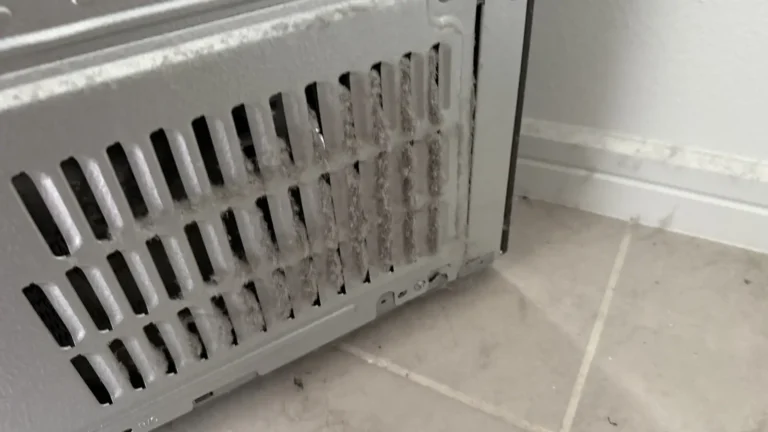
These photos show three different refrigerator inspection details: heavy frost around a freezer evaporator-cover area, dust and debris across a condenser/airflow area, and an ice-and-water dispenser control board. They are examples of conditions or components encountered during service—not proof that every cooling or dispenser complaint has the same cause.
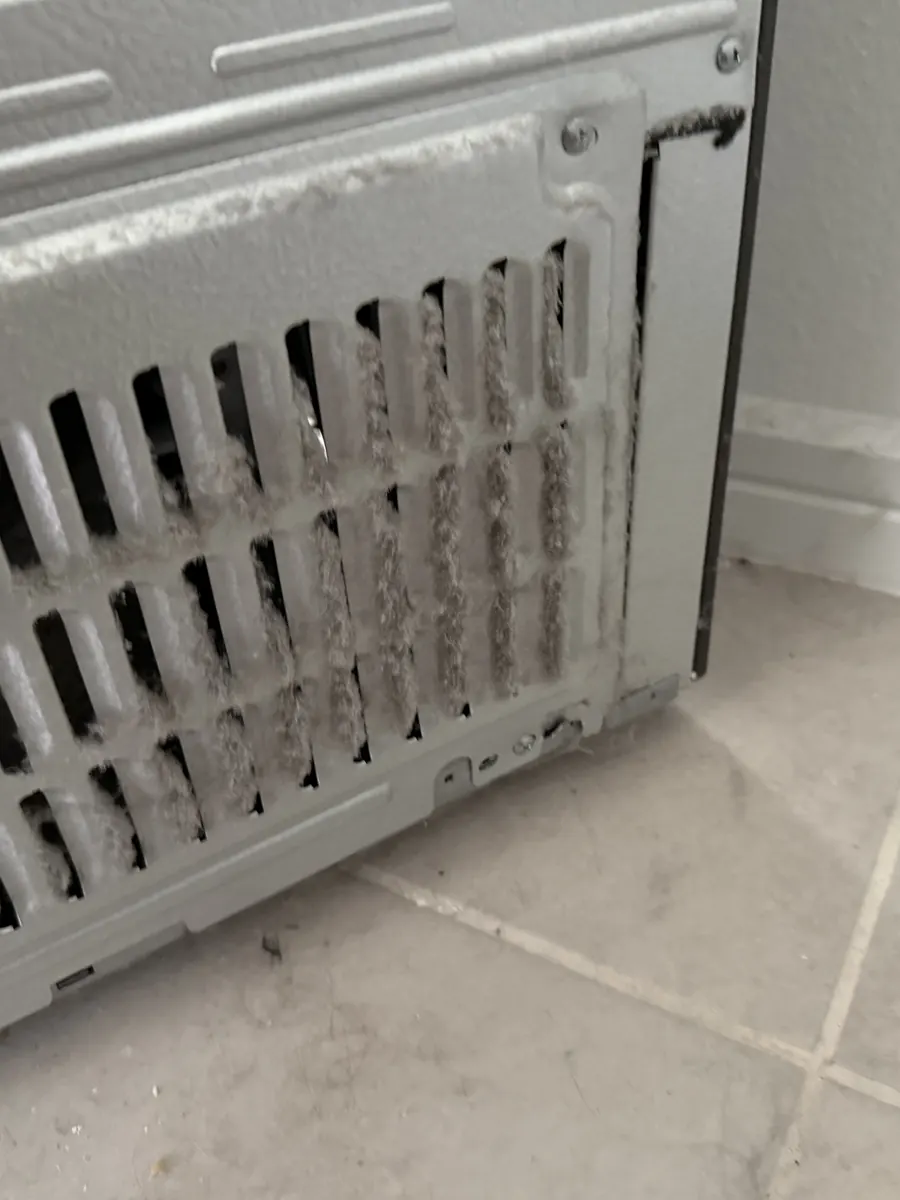
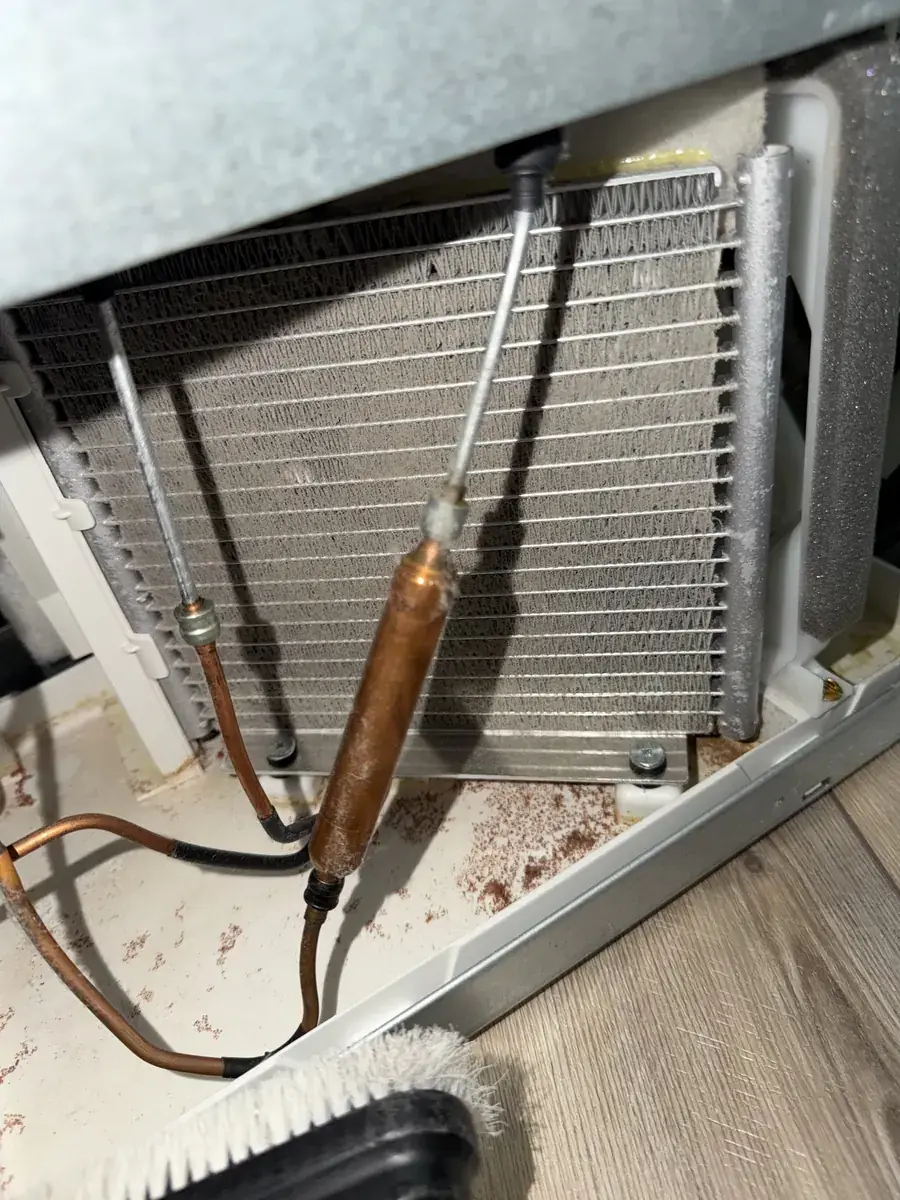
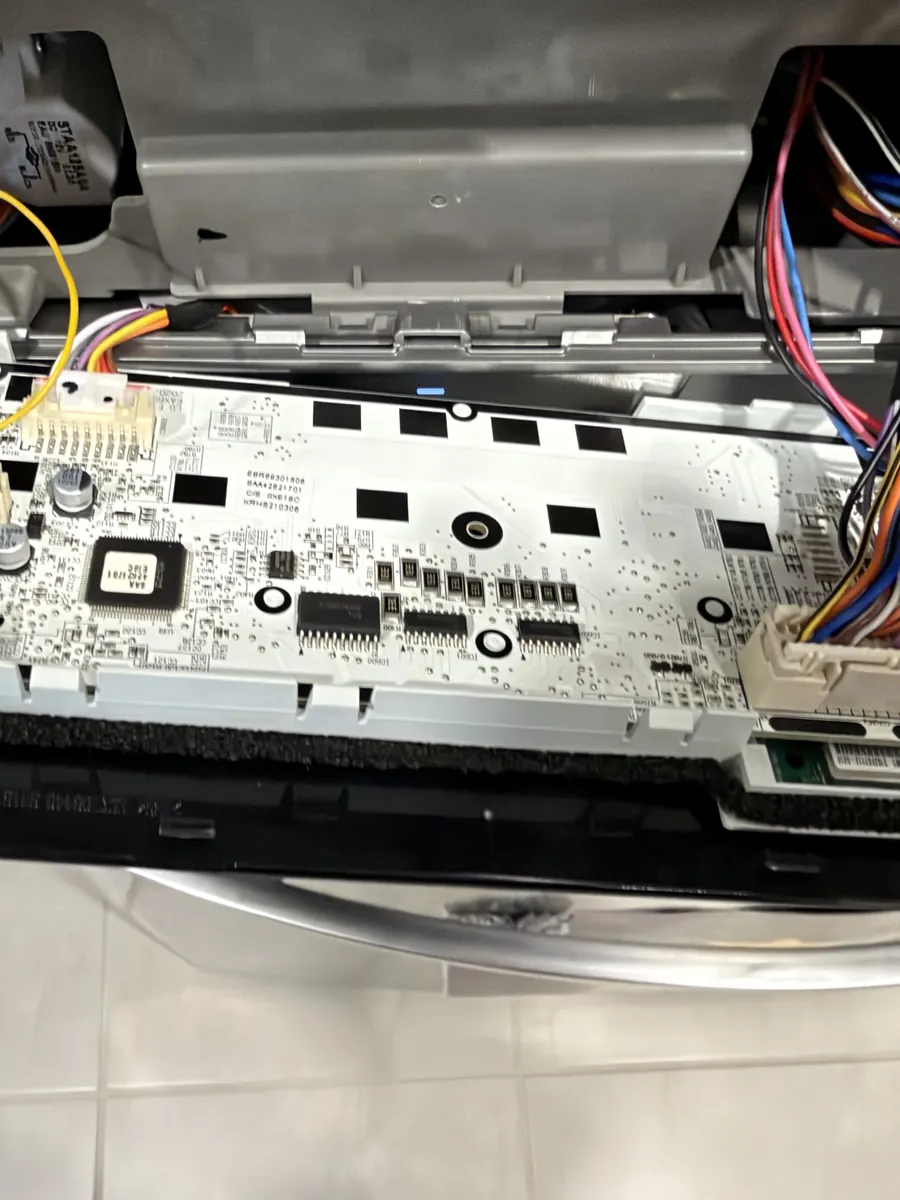
These are service photos, not disassembly instructions. Do not remove freezer panels, expose a control board, probe wiring, or handle refrigerant tubing. Richter’s Reliable Services does not advertise refrigerant charging or sealed-system refrigeration repair.
When to Stop Troubleshooting
- Perishable-food temperatures are rising and you need to protect the food.
- Heavy frost or solid ice covers a rear freezer panel or air passage.
- The refrigerator repeatedly trips a breaker, smells hot or burned, sparks, or has a damaged cord.
- Water is reaching wiring, a receptacle, or another electrical component.
- The compressor area clicks repeatedly, becomes unusually hot, or the unit will not stay running.
- Diagnosis requires removing an interior or machine-compartment panel, testing live voltage, or accessing refrigerant tubing.
- The symptom suggests a refrigerant leak or sealed-system failure, which is outside the advertised service scope.
For refrigerator diagnosis in Parrish, send the make, model number, measured temperatures, symptoms, error code, ZIP code, and a photo of the model tag. Availability and serviceability are confirmed case by case. Refrigerant charging and sealed-system work are not offered.
If you are comparing a repair quote with buying a new unit, use the appliance repair-or-replace decision guide to account for the installed replacement cost, parts availability, safety, and prior service history.
This guide combines current FDA food-safety guidance, model-specific manufacturer support, and firsthand service observations. It is not a diagnosis for every refrigerator design. Temperatures, controls, airflow paths, condenser access, and frost patterns vary by model; the owner’s manual and applicable recall instructions control. This guide was substantively reviewed on August 30, 2026.
Sources and Model-Specific Help
- Whirlpool Product Help: Checking Refrigerator Air Vents and Airflow
- GE Appliances: Refrigerator Condenser-Coil Cleaning and Access
- Samsung Support: Frost in the Freezer, Refrigerator, or Ice Bucket
- U.S. Food and Drug Administration: Refrigerator Thermometers and Food Safety
- Use the owner’s manual for your exact make and model as the controlling source for temperature settings, vent locations, condenser access, defrost instructions, error codes, and cleaning steps.
Related Tips & Guides
Browse All Tips & Guides →
Can One Damaged LVP Plank Be Repaired or Replaced?
Appliance Repair or Replace? A Parrish Homeowner Decision Guide
Electric Dryer Runs but Does Not Heat? Safe Checks Before Service
