
Table of Contents
An electric dryer can tumble normally and still produce no heat because its motor and heating system use different parts of the home’s power supply. A cycle setting, partially tripped breaker, restricted airflow, or an internal component can create similar symptoms. Start with the safe checks below and use the owner’s manual for your exact model.
Confirm that a heated cycle—not Air Only, Fluff, or Cool Down—is selected. Clean the lint screen, look for a crushed vent hose, and check whether the dryer’s double-pole breaker has tripped. If the breaker trips again, the plug or cord looks damaged, there is a burning smell, or the dryer is a gas model, stop. Do not open electrical panels or test live voltage.
Key Takeaways
- Tumbling does not prove that the heating circuit has power. An electric dryer can run with only part of its required supply available.
- Separate no heat from slow drying. A cold drum suggests a different path than a warm dryer with poor airflow or an overloaded drum.
- Airflow is a safety issue. Clean the lint screen and treat a crushed, disconnected, or restricted exhaust path seriously.
- This guide is for electric dryers only. Stop for repeated breaker trips, damaged cords, burning odors, gas connections, or any test involving live voltage.
No Heat or Just Long Drying Time?
First determine whether the drum is truly cold. With the dryer empty, select a heated timed cycle and let it run for about five minutes if the manufacturer’s instructions allow that test. Open the door and feel the air and inside of the drum without touching the rear grille. A completely cold drum points toward a cycle, power-supply, control, or heating-component problem. Noticeable warmth with slow drying points more strongly toward airflow, load, or venting.
- Drum turns but remains cold: check the selected cycle and the two-pole breaker before scheduling diagnosis.
- Dryer heats but clothes take multiple cycles: clean the lint screen and inspect the visible exhaust path.
- Heat starts and then stops: record how long it heats, the cycle used, and any error code.
- Burning smell, smoke, sparking, or repeated breaker trip: stop using the dryer and disconnect power if it is safe to do so.
Safe Electric Dryer Checks to Try First
1. Confirm That the Dryer Is Electric
This guide applies to electric dryers only. A typical full-size electric dryer uses a large 208- or 240-volt receptacle and a heavy cord. A gas dryer has a gas supply connection and follows a different diagnostic path. Richter’s Reliable Services does not advertise gas-appliance work, so identify the fuel type before requesting service.
2. Check the Cycle and Temperature
Air Only, Air Fluff, and parts of a Cool Down cycle intentionally use no heat. Some delicate, eco, or low-temperature settings may also feel cooler than expected. Select a heated Timed Dry cycle for the short empty-drum test, then return to the model’s recommended cycle for normal laundry.
3. Check the Dryer’s Double-Pole Breaker
Many electric dryers can keep tumbling when only part of their required supply is available. That is why “it runs” does not prove the heating circuit has power. If the electrical panel is safely accessible and clearly labeled, follow the dryer manufacturer’s instructions to switch the dryer’s paired breaker fully off and then back on once.
Do not remove the receptacle, cord cover, terminal-block cover, or dryer panels. Do not use a meter on a live dryer circuit. If the breaker will not reset, trips again, feels hot, or is not clearly identified, leave it off and contact a qualified electrician.
4. Clean the Lint Screen and Inspect Visible Airflow
Clean the lint screen before or after every load. With the dryer off, look behind it only if you can do so without pulling, climbing over, or tipping the appliance. A crushed, sharply kinked, or disconnected exhaust duct can reduce airflow. Also check the outdoor vent hood from a safe location for an obvious blockage or flap that does not open while the dryer runs.
Restricted airflow more often causes long dry times or overheating than a completely cold drum, but it still deserves attention. The U.S. Consumer Product Safety Commission warns that lint buildup in a dryer or exhaust duct can block airflow, create excessive heat, and contribute to a fire.
5. Note the Load, Sounds, and Error Codes
A packed drum limits tumbling and airflow. Separate heavy items from lightweight fabrics and avoid tightly filling the drum. Record any error code exactly as shown and note whether the dryer clicks, hums, or heats briefly. Check the code in the manual or the manufacturer’s model-specific support page rather than relying on a code list for a different dryer.
When requesting service, include the make, model number, whether the dryer is electric, whether the drum turns, whether it becomes warm at all, and whether the paired breaker was recently reset. Those details help distinguish a no-heat failure from a venting or cycle problem.
What a Dryer Airflow Inspection Can Reveal
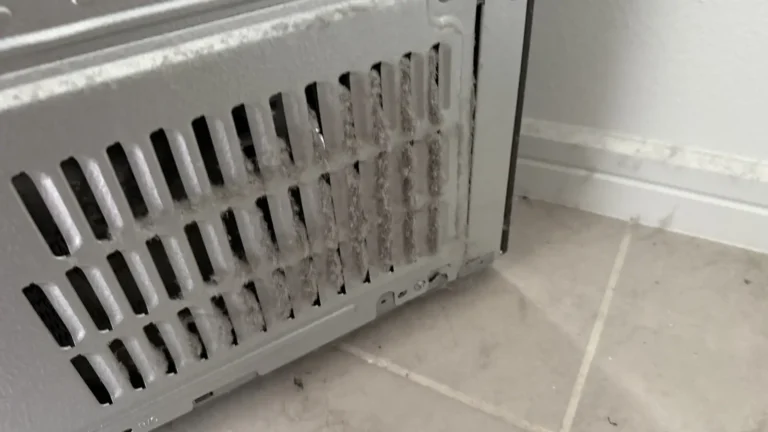
These photos document one recent electric-dryer service visit. Accumulated lint and debris were found inside the dryer cabinet, the accessible interior was cleaned, and punctures were visible in the flexible transition duct. This is one field example—not proof that every no-heat or long-drying complaint has the same cause.
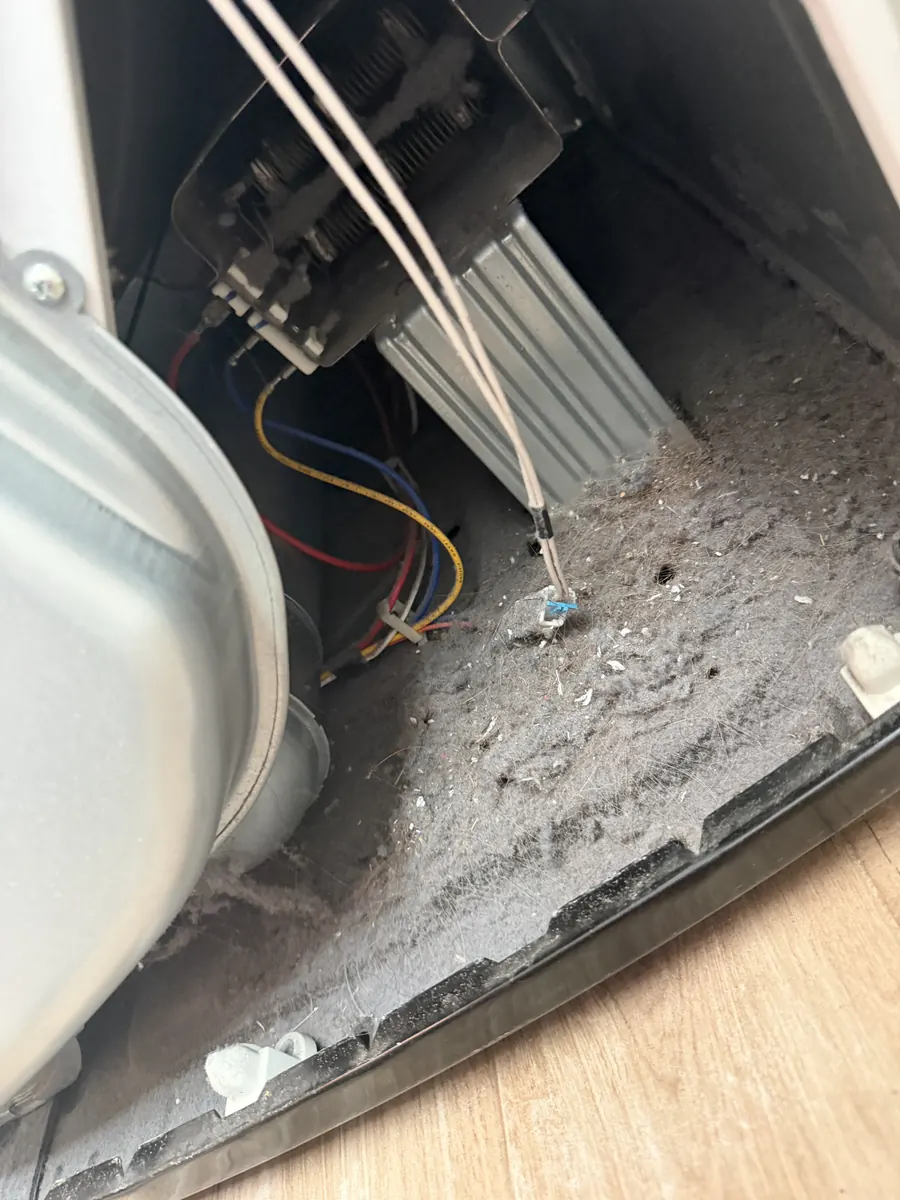
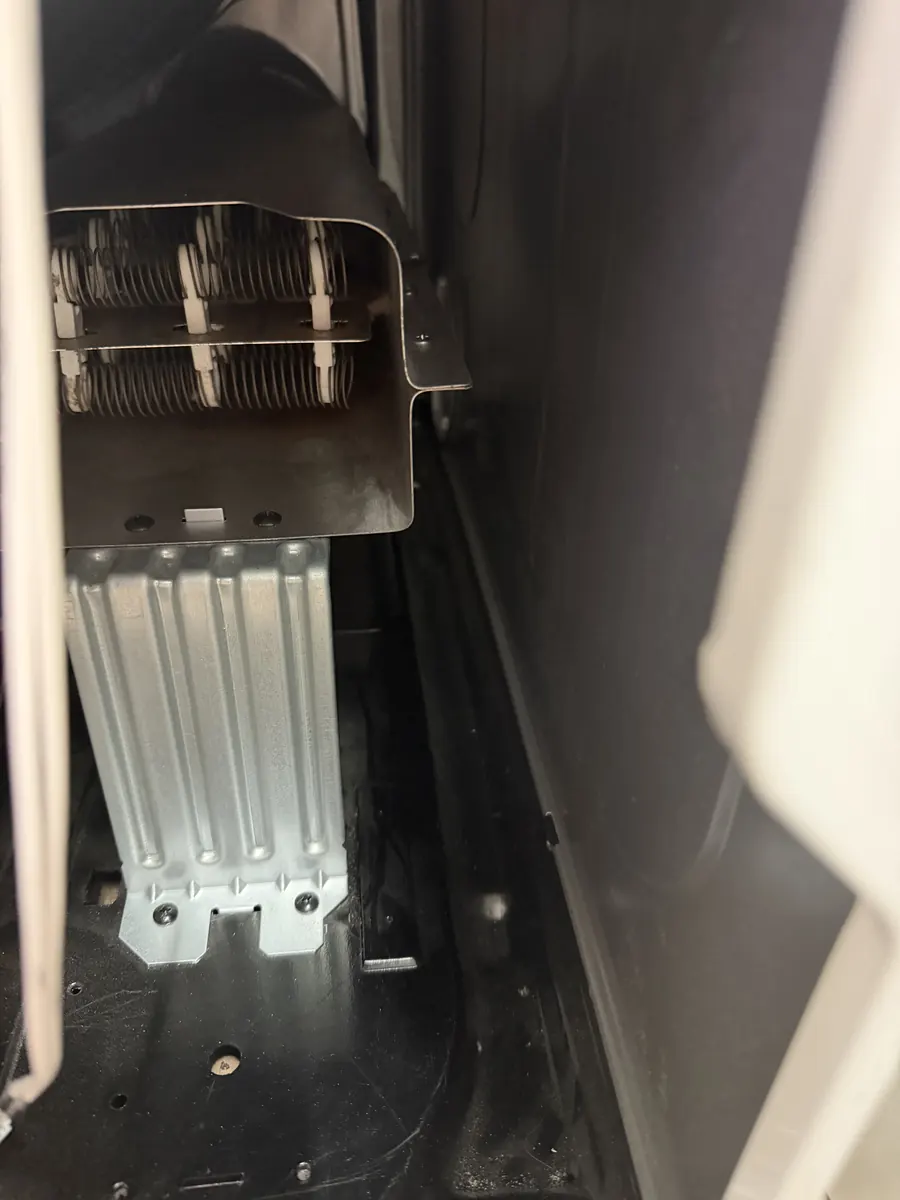
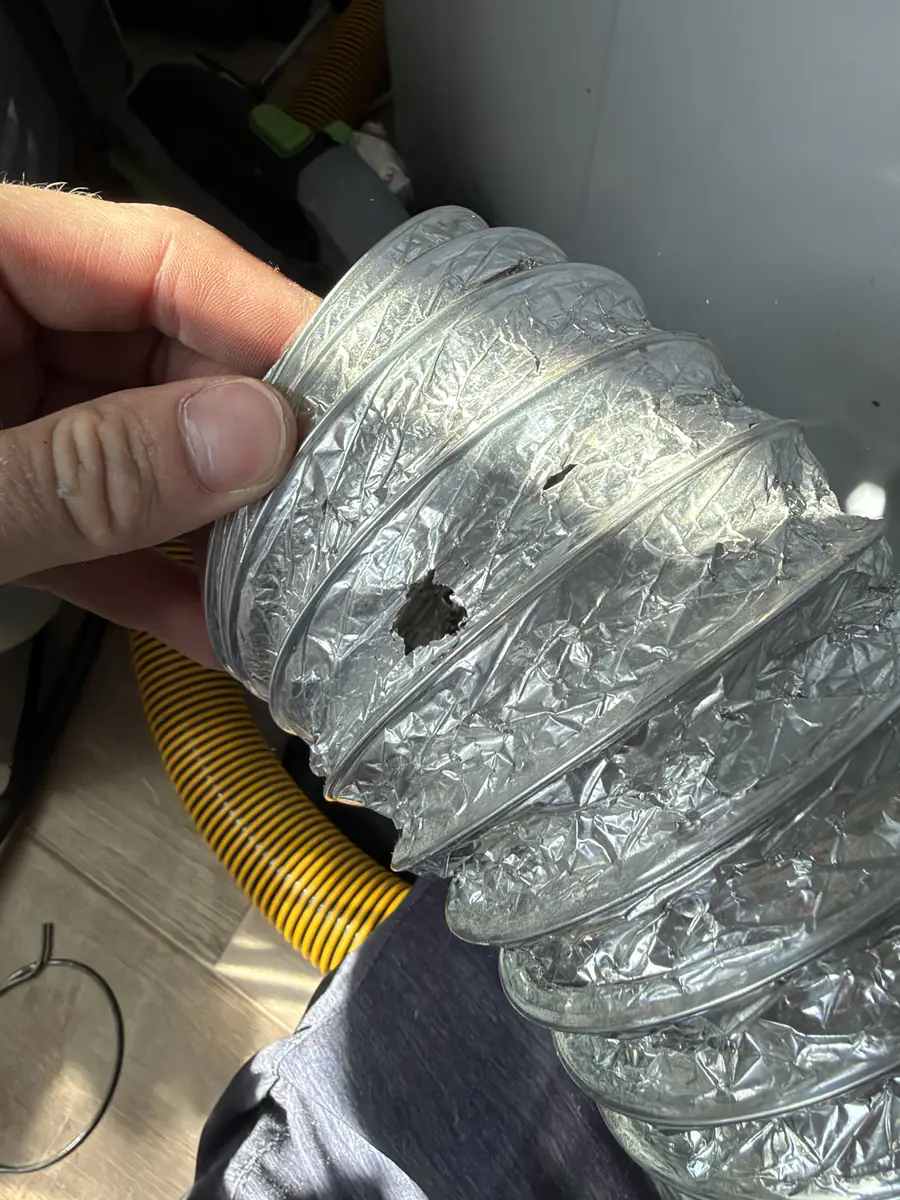
These are service photos, not disassembly instructions. Do not remove a dryer cabinet or reach inside the appliance as a homeowner check. Disconnecting, opening, and servicing the appliance should be left to someone working within the appropriate repair scope.
When to Stop Troubleshooting
- The breaker trips again after one reset or will not remain on.
- The plug, receptacle, or cord looks scorched, melted, loose, or damaged.
- You smell burning, see smoke or sparks, or hear electrical arcing.
- The dryer becomes unusually hot, the cabinet is too hot to touch, or the cycle stops repeatedly.
- The drum stays cold after the cycle and breaker checks.
- Diagnosis would require opening a service panel, moving a stacked unit, or testing a live circuit.
For electric dryer repair in Parrish, send the make, model number, symptom, error code, ZIP code, and a photo of the model tag. Availability and serviceability are confirmed case by case. Gas dryers and electrical-panel or household-circuit repairs are outside the advertised appliance scope.
If you are comparing a repair quote with buying a new unit, use the appliance repair-or-replace decision guide to account for the installed replacement cost, parts availability, safety, and prior service history.
This guide combines current manufacturer troubleshooting with U.S. Consumer Product Safety Commission fire-safety guidance and a firsthand lint-cleanout example. It does not diagnose an internal component or household circuit remotely. Fuel type, supply voltage, vent design, cycle logic, and safe access vary by installation and model. This guide was substantively reviewed on August 30, 2026.
Sources and Model-Specific Help
- Whirlpool Product Help: Dryer Is Not Heating
- GE Appliances: Electric Dryer Runs but Does Not Heat
- U.S. Consumer Product Safety Commission: Overheated Clothes Dryers Can Cause Fires
- Use the owner’s manual for your exact make and model as the controlling source for cycle settings, breaker guidance, vent requirements, and error-code steps.
Related Tips & Guides
Browse All Tips & Guides →
Can One Damaged LVP Plank Be Repaired or Replaced?
Appliance Repair or Replace? A Parrish Homeowner Decision Guide

Refrigerator Not Cooling? Safe Airflow Checks Before Service
